The Wedding Music Timeline: Guide to Key Moments from Ceremony to Party
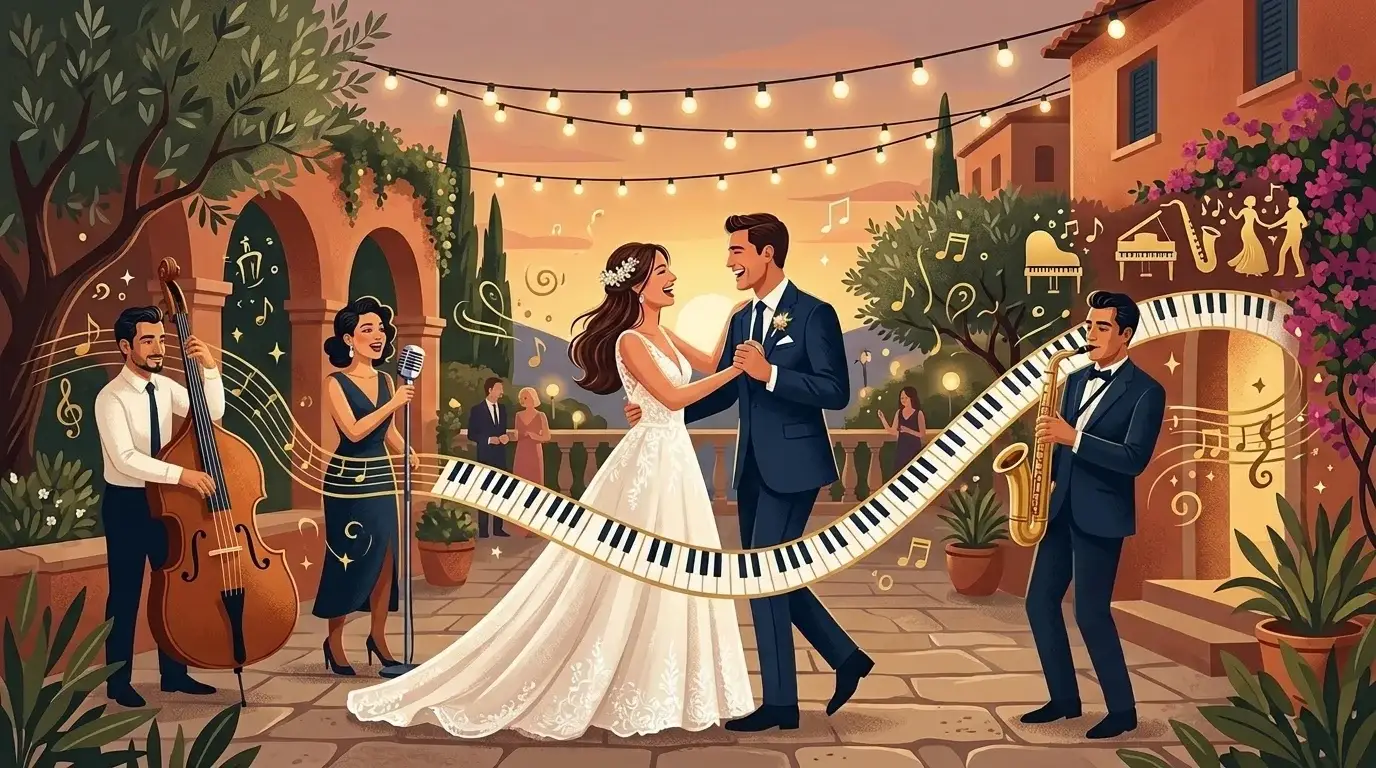
Planning the soundtrack for a destination wedding in Sicily is like directing an emotional film. Music is not just background filler; it is the invisible thread that sets the pace, shapes the ambiance, and guides your international guests smoothly through every chapter of the day.
One of the most frequent questions couples ask us during our initial consultation is: “How should we structure the music throughout the reception? And when is the ideal moment to open the dance floor?”
Crafting a balanced wedding music timeline means respecting the natural flow of the event—alternating heartfelt emotions with relaxed conversation, leading up to an exhilarating evening celebration. Here is our complete guide to the 7 essential music moments, complete with sound levels, genre recommendations, and insider production tips.
Wedding Music Timeline: Sound Levels, Genres & Line-ups
| Phase / Moment | Sound Level | Recommended Genre | Recommended Line-up | Production Note |
|---|---|---|---|---|
| 1. Ceremony (civil or symbolic) | 50–55 dB(A) | Classical, cinematic soundtracks, acoustic ballads | Piano & voice duo, violin, or harp | Discreet sound distribution with dedicated wireless microphones for vows |
| 2. Aperitivo & Cocktail hour | 55–60 dB(A) | Cool jazz, bossa nova, acoustic pop, swing | Acoustic duo or trio (piano, voice, sax or double bass) | Volume kept strictly below conversational level as guests mingle |
| 3. Grand entrance of the couple | 70–75 dB(A) | Uplifting pop, energetic funk, or signature favorite | Full live band or original track | Coordinated cue with the banquet maître upon door opening |
| 4. Seated dinner (courses) | 45–50 dB(A) (or silence) | Soft instrumental jazz or curated lounge playlist | Atmospheric playlist or gentle piano solo | Absolute respect for dining guests and discreet table service |
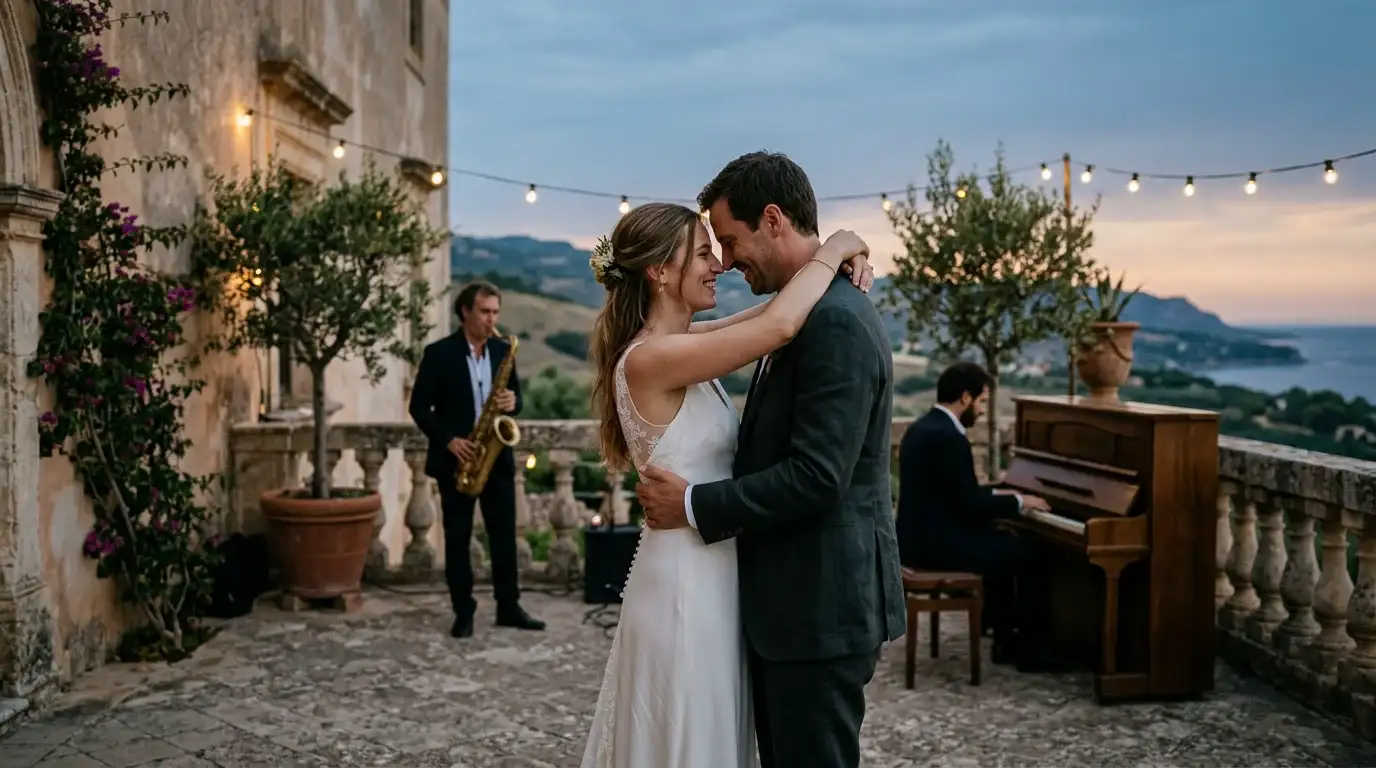
| 5. Romantic first dance | 65–70 dB(A) | Intimate love song, custom acoustic ballad | Lead voice & piano with melodic sax | Soft lighting; an intimate moment before inviting everyone to join |
| 6. Wedding cake cutting | 75–80 dB(A) | Triumphant, emotional melody with building climax | Live band performance or original recording | Precise second-by-second cue with toast and fireworks |
| 7. Dance party & Open bar | 80–85 dB(A) | Italian twist, rock’n’roll, 70s/80s/90s revival, dance | Full rhythm section + sax or live band / DJ set | Packed dance floor, infectious groove, and seamless energy |
1. The Ceremony: Solemn Emotion Without Intrusion
Whether you are holding a civil ceremony in a historic town hall or an outdoor symbolic blessing on the grounds of a Sicilian historic villa, ceremony music demands elegance and pinpoint timing.
The 5 key sound milestones include:
- Guest arrival & seating: Relaxing instrumental melodies (piano, harp, or acoustic strings) while guests take their seats.
- Groom’s entrance: A composed, distinguished piece—often a cherished movie theme.
- Bride’s entrance: The emotional peak; a soaring melody accompanying the walk down the aisle.
- Exchange of rings & signing: Gentle background at very low volume, ensuring vows and officiant speeches remain crystal clear.
- Recessional exit: A joyful, celebratory crescendo as confetti is tossed and congratulations begin.
[!TIP] For outdoor ceremonies in Sicily, always ensure your musicians provide an independent, battery-powered PA system and wireless microphones equipped with wind protection, so that every vow is heard clearly across every row.
2. Aperitivo & Cocktail Hour: Welcoming Elegance
The wedding aperitivo sets the musical tone for the entire reception. Guests arrive after travel or the ceremony, eager to toast, sample local Sicilian appetizers, and chat freely.
The golden rule here is acoustic discretion: music volume should never exceed 55–60 dB(A). An acoustic line-up such as a voice-and-piano duo or a trio with saxophone or double bass adds warmth and sophistication, seamlessly blending timeless jazz standards, sun-drenched bossa nova, and acoustic pop hits.
A practical trick is to greet guests with an elegant background playlist during the initial 20–30 minutes, unleashing the live band the moment the newlyweds arrive to elevate the cocktail buffet.
3. Grand Entrance: The First Wave of Energy
The couple’s entrance into the banquet area or courtyard marks the first burst of celebration.
- Selecting your track: Choose an uplifting, high-energy song with personal meaning—whether modern pop-soul, classic funk, or indie rock.
- Synchronization with the banquet maître: Band and catering staff must communicate with visual cues: the music strikes the exact second the doors open, prompting every guest to stand, clap, and raise a glass.
4. Seated Dinner: Respecting the Dining Experience
During the main courses, the culinary experience and table conversation take center stage.
- Soft background or musicians’ break: Sound levels must drop below 50 dB(A). Musicians can perform gentle instrumental vignettes (solo piano or acoustic guitar) or transition to a curated lounge playlist while taking their dinner pause.
- Eliminating sound fatigue: In ballrooms with high ceilings and stone walls (common in historic Sicilian estates), blaring music over the chatter of a hundred guests causes severe auditory fatigue. Experienced bands know when to step back.
5. The First Dance: Intimacy and Meaning
The first dance is universally the most photographed and filmed moment of the celebration. Typically held right after dinner or immediately following the cake cutting, it represents a private declaration of love surrounded by family and friends.
- Live performance or original master? If your special song relies on a distinctive vocal recording or studio arrangement, playing the original track is completely welcome. However, a bespoke live performance featuring acoustic piano, warm vocals, and a soulful saxophone solo creates a once-in-a-lifetime memory.
- Opening the dance floor: Toward the end of the song, the lead singer can invite parents, bridal party, and guests onto the floor, effortlessly transitioning from romance into high-energy dancing.
6. Wedding Cake Cutting: The Visual Climax
Cutting the wedding cake is the second grand ceremony of the evening, frequently staged outdoors beside an illuminated pool or on a panoramic terrace overlooking the sea.
- The musical cue: The song needs a triumphant, cinematic build-up that peaks exactly as the knife cuts the first slice and champagne glasses clink.
- Multi-zone sound: Confirm that your band has a dedicated secondary speaker at the cake station, ensuring music arrives crisp and focused without echoes.
7. Dance Floor & Open Bar: The Unforgettable Finale
With formal protocols behind you, the celebration shifts into full festival mode.
To keep a multigenerational crowd dancing together without clearing the floor, a successful setlist progresses in stylistic waves:
- Vintage Swing & Italian Twist: Irresistible retro hits (from 1950s swing to upbeat 60s classics) that instantly pull both younger friends and older relatives onto the floor.
- Rock’n’Roll & Soul Funk: Fast, driving grooves that build momentum.
- 70s/80s/90s Dance Revival or DJ Set: Modern floor-fillers to carry the open bar late into the night.
Couples can opt for a high-octane live band with rhythm and horns or a seamless combination of live music followed by an after-hours DJ set.
3 Crucial Mistakes to Avoid on Your Music Timeline
- Static volume throughout the day: A flat performance where music plays at the same volume from appetizers to midnight breeds fatigue. Dynamic peaks and valleys are the secret to keeping guests energized.
- Misalignment with the kitchen: If the band kicks into high gear just as hot main courses are being served, or if the entrance song begins before photographers are in place, chaos ensues. Pre-planned vendor coordination is essential (as detailed in our wedding backup checklist).
- Over-scripting every single minute: Agreeing on pivotal milestone songs (entrance, first dance, cake) is vital, but trusting seasoned musicians to read the crowd allows our repertoire to adapt dynamically in real time.
Frequently Asked Questions: Wedding Music Timeline
How many songs are typically played during a full wedding timeline?
For a full wedding day lasting 7 to 9 hours (from guest arrival through the end of the open bar), a professional band performs between 70 and 100 songs live, organized into thematic sets interspersed with scheduled dining breaks and background playlists.
Should live music continue non-stop while guests are eating dinner?
No. During seated first and second courses, live musicians should pause or provide very low-level instrumental background (under 50 dB(A)). Guests must be able to converse comfortably without shouting, and waitstaff need freedom to serve hot dishes seamlessly.
Is it better to schedule the first dance before or after the cake cutting?
Both workflows work well. A popular format is an intimate first dance right after the grand entrance or between dinner courses to warm up the room, followed by an energetic second dance that officially opens the open bar and party right after the cake cutting.
Which milestone songs must the couple choose personally?
Couples should personally select the tracks for three defining moments: the Grand Entrance, the First Dance, and the Cake Cutting. If live ceremony music is included, the processional, ring exchange, and recessional songs are also tailored to your personal taste.